One of the better articles from the era to cover the US and Canadian Anarchist movements
---
ANARCHY IN THE USA (AND CANADA)
Anarchist politics take root among the young
By Brian Ahlberg
From Utne Reader Nov/ Dec 1988
Clashes between young anarchists and police in three different cities during the past few months offers some evidence that a new North American anarchist “movement” now exists.
Anarchists played an active role in recent confrontations in Minneapolis, and New York City, but in both cases they were a minority faction within broader protests. The third imbroglio, however, pitted hundreds of anarchists, who came from across Canada and the United States to Toronto for a July “unconvention,” against police. According to Ecomedia Bulletin (July 12, 1988) Toronto’s anarchist biweekly, 28 protestors were arrested and three police officers were hospitalized. The newsletter accused police of beating demonstrators who had gathered at the local American consulate, where they were protesting the U.S. downing of the Iranian commercial jetliner. Although the anarchists initiated no violence, claims the Bulletin, “When we get attacked, we will fight back regardless of anyone’s so-called ‘authority’”.
The Minneapolis incident follows the sending of U.S. troops to Central America last March. A large but conventional civil disobedience action aimed at disrupting traffic in the city’s fashionable Uptown district was jolted into front-page prominence by youthful punks and skinheads, many organized under the banner of the Revolutionary Anarchist Bowling League (RABL). RABL militants burned an American flag, pelted police cars with paint bombs, and hurled a bowling ball through the window of a nearby military recruiting station- all described in glorious detail in the pages of the group’s small, sporadic, but stylish tabloid, the RABL ROUSER (Issue #3). The young protestors also danced in the streets and conscientiously cleared all the litter from the area before leaving the scene. One RABL insider explained to the St. Paul Pioneer Press Dispatch (March 27, 1988) that the group’s name was chosen not only for its acronym and humor, but also because “bowling appeals to the working class, and revolution does not but should”.
“A little ragged rally” against curfews in Tompkins Square Park- a nighttime hangout for youths and homeless people on Manhattan’s Lower East Side- led to a melee one night in August that the Village Voice (Aug 16, 1988) termed a “police riot,” which cost two ranking New York City police officers their posts. Rally leaders sported a black flag and “Class War” banner, and shouted slogans like “Die Yuppie scum!” to protest the area’s gentrification. Early morning pedestrian traffic and local residents joined the demonstration as 450 officers and a police helicopter were called to the park. Police swept through the crowd on horseback and used unnecessary force against bystanders, according to the police commissioner’s report.
Approximately a thousand committed, active anarchists are part of this new North American movement- a majority of whom are between the ages of 15 and 30. Drawn largely from young people mobilized by the twin threat of military and ecological holocaust, and to a lesser degree from the disaffected mainstream protest movements and the hierarchical Marxist left, new anarchists seem driven more by the desire to live anti-authoritarian lives than by commitment to anti-statist ideology. The organized groups are concentrated in San Francisco, New York City, Minneapolis and Toronto, with some activity going on in other cities such as Atlanta, Albany, Philadelphia and Lawrence, Kansas.
Punks, squatters, workers, students, and food co-op members have created a “political patchwork” from “hippie communalism, anti-war activism, punk culture, ecology, animal rights, sexual liberation, and tribal spiritualism,” according to the Toronto magazine NOW (July 7, 1988). The magazine points to young anarchists “composted ideology” and traces its lineage to the expressions of such diverse figures as Mikhail Bakunin, Peter Kropotkin, Emma Goldman, Sid Vicious and Yoko Ono. New anarchists mention the influence of the Spanish Civil War, the Italian writer Malatesta, and the Situationists (radical leaders of the 1968 student/ worker uprising in Paris famous for their slogan, “All power to the imagination”).
But far more often than relying on classic texts or received wisdom, new anarchists use their own experiences in attempting to create independent communities based on self-reliance, voluntary simplicity, and mutual aid. Decentralized anarchist networks communicate in person or through newsletters so they can feel connected with their young counterparts in Berlin, Copenhagen, London, Athens and Gdansk.
One 27-year old protestor from the Tompkins Square Park riot in New York City embodies the spirit of political non-conformity and direct action bred from desperation. He explained to the Village Voice (Aug 23, 1988) that he has lived his entire adult life under Ronald Reagan. “So when I have a problem, I do not write my congressman.” When things get bad, he takes his grievances to the streets. “And so do my neighbors, like we did Saturday night.”
Monday, April 15, 2013
Tuesday, April 9, 2013
ACT UP 'Stop The Church' Demonstration 12.10.89
The AIDS crisis in the 1980's was COMPLETELY out of control. People were dying all over the place in NYC, and the authorities (NYC government, Federal government, civil organizations) were very slow to respond. It felt like a plague had hit us, and nobody in power seemed to care. Most felt at the time this was because the primary people that were dying from the disease were gay men and IV drug users, both considered marginal and outsider populations by the mainstream.
ACT-UP (AIDS Coalition to Unleash Power) was formed to combat government and media indifference to the crisis. They did an AMAZING job of bringing this issue to the fore.
One of their most high profile cases, STOP THE CHURCH, was held outside St. Patrick's Cathedral on 12/10/89. Excerpted from ACT UP's Wikipedia page:
"ACT UP disagreed with Cardinal John Joseph O'Connor on the Roman Catholic Archdiocese's public stand against safe sex education in New York City Public Schools, condom distribution, the Cardinal's public views on homosexuality, as well as Catholic opposition to abortion. This led to the first Stop the Church protest on December 10, 1989 at St. Patrick's Cathedral, New York. In December 1989, approximately 4,500 protesters mobilized by ACT-UP and WHAM! gathered outside a mass at the cathedral. A few dozen activists entered the cathedral, interrupted Mass, chanted slogans, or lay down in the aisles.One protester broke a communion wafer and threw it to the floor. One-hundred and eleven protesters were arrested. Only minor charges were filed, punished primarily by community service sentences; some protesters who refused the sentences were tried, but did not serve jail time"
The Anarchist youth group I was a part of (NYDAC) came out in big numbers to support this protest. Most of us were NYC high school kids, and so the issue of condoms in schools and sex education directly affected us. We didn't believe the Catholic Church should have the power to influence the policy of secular institutions like NYC public schools.
Furthermore, we thought the Church's continued stance against condoms and homosexuality seemed insane when people were dying in the streets. The Church's response was to build more AIDS hospices! They were willing to help you die, but they weren't trying to help people NOT get AIDS in the first place.
The abortion issue was also front and center in the USA. There was a constant fear that Roe v. Wade was going to be overturned by the Supreme Court, and that abortion would once again be illegal, costing more women's lives in unsanitary, back-alley abortions.
Finally, I took PERSONAL relish in these protests as I had grown up a dedicated Catholic, but by 16 years old I was disgusted by the hypocrisy I had seen in the Chruch I was brought up in. These people were not "following on the path of Jesus", which is suppose to be the goal of all Catholics. They were not humble and anti-materialistic. They seemed to have missed all the memos about love and compassion for your fellow human beings. Catholicism had become defined by its' intolerance and backward-thinking. I was quite proud to speak out against it all.
Apparently there is a documentary on this protest by the director Robert Hilferty called "Stop The Church". I haven't seen it yet, but a friend told me it was quite good.
Sunday, March 31, 2013
Rock Against Racism w/ NAUSEA, FALSE PROPHETS @ Central Park Bandshell 05.01.88
A pivotal concert in my young life. 9th grade.
NAUSEA and the FALSE PROPHETS at the Central Park band shell for a Rock Against Racism, organized by the Yippies.
Most of my close friends over the next 3-4 years would be at that show.
A definite high water mark event for the underground NYC punk scene.
Photo by Andrea...i think
Here are some photos from the day taken by my man John A.:
Neil Robinson with a stack of fliers, and Darby next to him on stage.
Ralphy Boy from SQUAT OR ROT addresses the crowd.
Neil takes flight
My friend and pen pal John A. at the show
A photo from Sam Moon's collection of the stage at the RAR.
These photos are great because the crowd shots show faces I remember vividly, most of whose names I can still instantly recall. I was wide eyed back then, taking in everything.
I've said it before and I'll say it again- when you catch shows like this one young like I did it kind of ruins you, because rock n roll and music in general rarely ever comes across as raw or as important as it did at shows like this one. Even back then I knew I was a witnessing realness, and I'd better appreciate it as much as possible. And I definitely did!
NAUSEA and the FALSE PROPHETS at the Central Park band shell for a Rock Against Racism, organized by the Yippies.
Most of my close friends over the next 3-4 years would be at that show.
A definite high water mark event for the underground NYC punk scene.
Photo by Andrea...i think
Here are some photos from the day taken by my man John A.:
Neil Robinson with a stack of fliers, and Darby next to him on stage.
Ralphy Boy from SQUAT OR ROT addresses the crowd.
Neil on the mic
Amy on the mic
Stage diverNeil takes flight
My friend and pen pal John A. at the show
A photo from Sam Moon's collection of the stage at the RAR.
These photos are great because the crowd shots show faces I remember vividly, most of whose names I can still instantly recall. I was wide eyed back then, taking in everything.
I've said it before and I'll say it again- when you catch shows like this one young like I did it kind of ruins you, because rock n roll and music in general rarely ever comes across as raw or as important as it did at shows like this one. Even back then I knew I was a witnessing realness, and I'd better appreciate it as much as possible. And I definitely did!
Interview w/ Vinny A.P.P.L.E. from MRR Jan 1987
A.P.P.L.E. (from MAXIMUM ROCK N ROLL January 1987)
Interview with Vinny of A.P.P.L.E. by Lydia Ely
MRR: How did A.P.P.L.E. come about in a city like New York where most of the bands would not exactly be called political? Did you see a need for a band with a strong message, or did it just follow from what you wanted to do?
V: The main purpose of A.P.P.L.E. and its main reason for existence is to create a forum for our beliefs. This society not only condemns unpopular beliefs, but also makes it very difficult for such beliefs to be heard. Music is just one medium we have utilized to open communication. In the past we have created Counterculture magazine, and various other literature, duplicated leaflets, etc. and handed them out at gigs for free. I see a strong need for bands with messages that are typically not heard. The New York scene, as I see it, is a quagmire of violence, sexism, fashion and fascism. A.P.P.L.E. strives to rise above such quicksand and offer an alternative. The hardcore bands that are most popular in NYC either have fascist or just stupid/ silly lyrics.
MRR: What is it like being a politically active punk band in New York City? Is the rest of the scene open to you and what you do? Are you supported locally?
V: The NYC hardcore scene is not open to political music. There are only two clubs in NYC that have regular “punk” gigs: the Ritz and CBGB. Neither is open to political music and neither do I patronize them. These clubs are only interested in money. Whatever sells will play. A.P.P.L.E. always plays non-profit gigs. We have played several animal rights benefits, a benefit for a Nicaraguan schoolhouse, and many free gigs.
MRR: You advocate anarchy/ autonomy, pacifism, peace, liberty and equality. Do you think it is possible to live in today’s society, with all its complex networks involving corporations, and still push for those things without being hypocritical?
V: It is vitally important to push for such “things” in this society. Capitalist networks and corporations rely on the support of the masses and without the support of the masses, corporations disintegrate. I, personally, try to live my life as naturally as possible, causing as little harm as possible to other people and species of animals, and causing as little harm to the environment and the earth as a whole. I find nothing hypocritical in doing so. No one is perfect, and I don’t pretend to be perfect.
MRR: What kind of lifestyle do you think would be ideal in this society for someone who is against the system? In other words, is it possible to live within the system and to still fight against it?
V: It is possible to live within the system and at the same time fight against it. It is also sad to say, but those who choose to disregard the system will most likely be crushed by it financially and forced to live in poverty. I feel, in this society, we must use any available tools within or outside the system to disintegrate the church and state. It is possible to enjoy an Anarchist lifestyle and hopefully to at least ignore, if not destroy the system, but at this time it is very difficult unfortunately.
MRR: Do you think it is necessary to remain in society while being against it? Do you think that rejecting it and living in a separate, self-sufficient isolated way is a “cop-out” of sorts?
V: I think we must ask ourselves the question of- is it healthy to live in a hostile atmosphere such as this present society? I don’t think so. Living your own life, regardless of what the system dictates, is not a “cop-out” and in the ultimate goal of Anarchism.
MRR: Do you have any political affiliations? Do you think the power to vote is any power? Are things like “No Business As Usual” etc. important? Necessary? On the right track?
V: I presently am involved in several political groups. I feel being politically active is a responsibility of being a citizen. I encourage people to vote, not because I think our electoral process is good, but because I feel that voting does give people power to- in the very least- voice their opinion in a way in which the state officially recognizes it. Also I feel that by not voting and keeping quiet about it you become impotent. There is a not a ‘none of the above’ lever in voting booths, and not voting indicates to the system that you are indifferent or just don’t care who is elected. Also, many important propositions are placed on the ballot concerning the environment, etc. Suppose two candidates were running in an election for president, one supports the invasion of Nicaragua, the other does not, one supports “Star Wars”, the other does not. I most definitely would vote for the candidate opposing “Star Wars” and the invasion of Nicaragua (ie the lesser of two evils). I feel that if political activists did not vote it would guarantee the election of the more “evil” candidate. Surely we are all aware that the system regulates who is allowed to run, but in the very least even if a progressive candidate has no chance of election, voting can make a statement about which policies one may favor. “No Business As Usual” etc. is very important and on the right track because it allows people to take part in direct action anyway they can, anywhere they can, and leaves the particular action one may take in the hands of each person individually.
MRR: Do you think that music as a medium is the best way to communicate a message? With your music, do you feel confident that people listen to the lyrics as much as the music? In print more successful as a means?
V: I think music is just one of the forms of media that can be used to communicate a message. I don’t know which is more successful; that’s why we use any available media to get our message across (we also use slides, costumes and props at gigs). I think we appeal to people primarily through our lyrics and the music is there to make the message more “enjoyable” as compared to reading a book.
MRR: Do you think Americans are apathetic? Why do you think they are (if they are)? Do you think there’s something about American society that encourages conformity?
V: Americans are apathetic, not naturally, or by coincidence but because the system likes them that way. The system’s health depends upon the apathy and subjugation of the masses. Therefore, the system not only encourages conformity, but ostracizes those that refuse to conform. It must do so because the free will of the individual threatens its very existence.
MRR: How optimistic are your goals as a band?
V: Our music often appears negative to some people. I think this is because we expose and attack the negative aspects of society, the things that most people don’t like to hear about. Our goals are optimistic though. It is very optimistic to strive for a world without war, without bondage and without prejudice. Although much of our music is angry, no malice is intended. We focus mainly on the problems of society. I also feel our alternative way of thinking is refreshing and very optimistic.
MRR: What can the “average Joe” do to promote Anarchy/ Autonomy, Pacifism, Peace, Liberty and Equality? Is say working in a soup kitchen or a shelter significant?
V: The “average Joe” must become a socially responsible global citizen. We must refuse to take part in actions which are detrimental to our way of being. Any job working for the public interest is very significant. The main reason why most people do not work in soup kitchens, etc. is because it is not profitable to do so. Most public interest work is volunteer work. Why? Because the system likes it that way. The system sees to it that if there even is a salary involved, it is not enough for the average Joe to practically survive on, therefore, with the extremely high cost of living, the system forces us to seek employment elsewhere such as in defense plants which have very high salaries.
MRR: Are people assholes by nature? Do you believe that people, once exposed to good, pacifistic, humanitarian ideas will take the initiative to change their lives?
V: I believe people are not greedy, selfish, hateful “assholes” by nature. They are conditioned by society to exploit each other and this is necessary for the system to operate. People adapt to their respective environments. Surely, if a child was exposed to good pacifistic, humanitarian ideas as opposed to those the child now encounters on a daily basis, it would have a totally different attitude towards society and the world as a whole. We must continually evolve and change, for the lack of change brings stagnation, disease and death.
MRR: Up until now you haven’t put any vinyl out. Do you plan to press a record? If not, why?
V: In the past we have made only tapes because I wanted to have complete control, over the production. Also, tapes are less expensive to produce than records and therefore we can sell them for less and even give them away., whereas giving records away is many times more expensive and practically impossible. Selling your music for less means ultimately that you can reach many more people. We hope to make a record as our next project very soon. We presently have a tape available entitled Neither Victims Nor Executioners. It’s thirty minutes of music plus a ten page lyric booklet for three dollars post paid sent to the address below.
MRR: Any last words, comments, etc?
V: We would just like to thank Lydia Ely and MRR for this opportunity to reach its readers. We have always supported MRR and feel it is very important because it highlights alternative and independent music. A.P.P.L.E. would also like to strongly encourage anyone to write to us and let us know what they think of this interview or for any reason whatsoever.
Peace, Liberty, Equality,
Vinny
A.P.P.L.E. 25 Van Dam Street, Brooklyn, New York 11222
Tuesday, March 19, 2013
A Brief History of NYC Anarchist Bookstores 1988-2005
A BRIEF HISTORY OF NYC ANARCHIST BOOKSTORES 1988-2005
By Dan Sabater
I first got involved in left-wing politics in 1987 at the age of 15.
I became an Anarchist in 9th grade (1988) and started hanging out in the LES.
---
THE ANARCHIST SWITCHBOARD (Spring 1988- Summer 1989)
The first spot I stumbled onto was the Anarchist Switchboard located in the basement of 324 East 9th Street between 1st and 2nd Ave. I think it was opened in 1986 by a guy from the Libertarian (aka Anarchist) Book Club. A girl from my high school took me down there. It was a damp and dingy one-room spot with couches, exposed light bulbs and red concrete walls. I liked it a lot, and gave them my birthday money to help out with the rent.
Some local @’s ran a small bookstall out of the place but it was hardly ever open. They also had speakers and hosted organizing meetings and poetry/ folk performances. There was lots of activity in NYC and on Long Island that came out of that place, including NYC’s first Food Not Bombs (from people who had visited San Francisco and saw their F’n’B in action). The Switchboard also produced 11 issues of a zine (Black Eye) and a pamphlet (“Bakunin on Violence”).
The Anarchist Switchboard also figured somewhat in the August 1988 Tompkins Square Park riot. Lots of Switchboard folks were there. The Switchboard was also the victim of a right-wing skinhead mob attack on July 4th, 1989 and several people were badly injured (the skinheads were looking for “flag burners”).
Eventually the Switchboard (which was started as a “free space” experiment) was taken over by a mob of junkies. They slept there and stank the tiny place up. Everybody stopped going there, and there was an outcry from the neighborhood to shut the place down. And down it went.
SABOTAGE (Fall 1989- Summer 1990)
A crew of people from the Switchboard wanted to start a more professional- style bookstore. They quite ambitiously rented a storefront on St. Mark’s Place (96 St. Mark’s Place btwn 1st & 2nd Ave). Sabotage opened Fall ‘89.
I was a great place. They had shelves and shelves of awesome books, the place was always abuzz with activity (often too much!). Lots of activities related to the squatters movement and the height of the struggle against a curfew in Tompkins Square Park.
In March 1990 a punk rocker was killed (stabbed to death) by right-wing skinheads just up the street from Sabotage. July 4, 1990 an Anarchist picnic was attacked by this same mob of right-wing skins.
Sabotage crashed and burned. The neighborhood was hot because of lots of clashes with the police around the park and in the squats. There was a lot of aggro and pressure. Eventually the collective that ran the place split in two. The bookstore got taken over by an assortment of LES crazies and didn’t last a minute. The more level-headed Anarchist element dropped out and put out a pamphlet explaining their side of things (“What Ever Happened To Sabotage?”).
@ CENTRAL (Winter 1990- Summer 1991)
@ CENTRAL was started after SABOTAGE. They were located east of Tompkins Square Park at 208 East 7th Street between Ave B and C. I remember the collective having a lot of punk women involved with it. They had regular film showings and vegan cafĂ© events. To tell the truth I didn’t spend much time there.
BLACKOUT (Spring 1995- September 2000)
I recall Blackout growing out of the editorial collective of the Anarchist newspaper LOVE & RAGE, but don’t quote me on that. Located at 50 Ave B between 3rd and 4th Streets. Probably the most professional of all the Anarchist bookstores. Definitely the best stocked with Anarchist books. Not really sure why it closed- it had probably just run its course and the neighborhood also changed a lot due to gentrification. Blackout saw Anarchism move from being an LES phenomena to getting more associated with the next generation of activists: Reclaim the Streets, Critical Mass, anti-globalization activists, etc.
MAYDAY BOOKS (Winter 2000-Current/ 2005)
Out of the ashes of Blackout came Mayday Books. NYC’s current Anarchist infoshop is located in the entrance to Theater For a New City at 155 First Ave. A good source for Anarchist reading material, and a good place to get plugged in to what’s going on with NYC Anarchists
Post-script:
MAYDAY BOOKS closed under contentious circumstances in Feb 2007.
Check the story from the NY Times here:
http://www.nytimes.com/2007/02/18/nyregion/18east.html?_r=0
By Dan Sabater
I first got involved in left-wing politics in 1987 at the age of 15.
I became an Anarchist in 9th grade (1988) and started hanging out in the LES.
---
THE ANARCHIST SWITCHBOARD (Spring 1988- Summer 1989)
The first spot I stumbled onto was the Anarchist Switchboard located in the basement of 324 East 9th Street between 1st and 2nd Ave. I think it was opened in 1986 by a guy from the Libertarian (aka Anarchist) Book Club. A girl from my high school took me down there. It was a damp and dingy one-room spot with couches, exposed light bulbs and red concrete walls. I liked it a lot, and gave them my birthday money to help out with the rent.
Some local @’s ran a small bookstall out of the place but it was hardly ever open. They also had speakers and hosted organizing meetings and poetry/ folk performances. There was lots of activity in NYC and on Long Island that came out of that place, including NYC’s first Food Not Bombs (from people who had visited San Francisco and saw their F’n’B in action). The Switchboard also produced 11 issues of a zine (Black Eye) and a pamphlet (“Bakunin on Violence”).
The Anarchist Switchboard also figured somewhat in the August 1988 Tompkins Square Park riot. Lots of Switchboard folks were there. The Switchboard was also the victim of a right-wing skinhead mob attack on July 4th, 1989 and several people were badly injured (the skinheads were looking for “flag burners”).
Eventually the Switchboard (which was started as a “free space” experiment) was taken over by a mob of junkies. They slept there and stank the tiny place up. Everybody stopped going there, and there was an outcry from the neighborhood to shut the place down. And down it went.
SABOTAGE (Fall 1989- Summer 1990)
A crew of people from the Switchboard wanted to start a more professional- style bookstore. They quite ambitiously rented a storefront on St. Mark’s Place (96 St. Mark’s Place btwn 1st & 2nd Ave). Sabotage opened Fall ‘89.
I was a great place. They had shelves and shelves of awesome books, the place was always abuzz with activity (often too much!). Lots of activities related to the squatters movement and the height of the struggle against a curfew in Tompkins Square Park.
In March 1990 a punk rocker was killed (stabbed to death) by right-wing skinheads just up the street from Sabotage. July 4, 1990 an Anarchist picnic was attacked by this same mob of right-wing skins.
Sabotage crashed and burned. The neighborhood was hot because of lots of clashes with the police around the park and in the squats. There was a lot of aggro and pressure. Eventually the collective that ran the place split in two. The bookstore got taken over by an assortment of LES crazies and didn’t last a minute. The more level-headed Anarchist element dropped out and put out a pamphlet explaining their side of things (“What Ever Happened To Sabotage?”).
@ CENTRAL (Winter 1990- Summer 1991)
@ CENTRAL was started after SABOTAGE. They were located east of Tompkins Square Park at 208 East 7th Street between Ave B and C. I remember the collective having a lot of punk women involved with it. They had regular film showings and vegan cafĂ© events. To tell the truth I didn’t spend much time there.
BLACKOUT (Spring 1995- September 2000)
I recall Blackout growing out of the editorial collective of the Anarchist newspaper LOVE & RAGE, but don’t quote me on that. Located at 50 Ave B between 3rd and 4th Streets. Probably the most professional of all the Anarchist bookstores. Definitely the best stocked with Anarchist books. Not really sure why it closed- it had probably just run its course and the neighborhood also changed a lot due to gentrification. Blackout saw Anarchism move from being an LES phenomena to getting more associated with the next generation of activists: Reclaim the Streets, Critical Mass, anti-globalization activists, etc.
MAYDAY BOOKS (Winter 2000-Current/ 2005)
Out of the ashes of Blackout came Mayday Books. NYC’s current Anarchist infoshop is located in the entrance to Theater For a New City at 155 First Ave. A good source for Anarchist reading material, and a good place to get plugged in to what’s going on with NYC Anarchists
Post-script:
MAYDAY BOOKS closed under contentious circumstances in Feb 2007.
Check the story from the NY Times here:
http://www.nytimes.com/2007/02/18/nyregion/18east.html?_r=0
Sunday, March 3, 2013
Seth Tobocman cartoon
One day I am going to do an expanded article on 'Anarchist/ Squatter and Punk artists of the late 1980's and early 1990's'. For now you will just have to satisfy your craving with this strip from the revered squatter artist Seth Tobocman. Came across this in my files recently, and it's always been my favorite of Seth's work (which is saying A LOT, because I love the guy). Really captured the way I felt walking around NYC around Y2K. If there's one thing the Tompkins Square Park rebellion inspired it was a lot of great visual art.
Monday, February 18, 2013
Punk Films That Were Available In The 1980's
The 1980's American hardcore punk scene corresponded with the birth of home video cassette recorders (VHS or Sony Betamax). Film played a key role in teaching kids what it meant to look and be 'punk'.
These were the punk rock movies that I remember from way back when. In addition to home video, there were still a lot of old movie theaters left. It was still possible to see many of these films on the big screen at a good price (as 'Midnight movies', cult films, etc.).
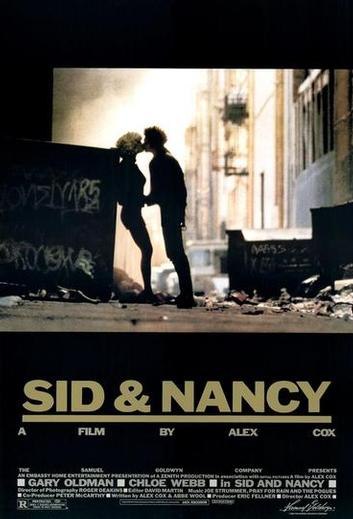
1) SID & NANCY (1986) Directed by Alex Cox of REPO MAN fame, I saw this at Bleeker Street Cinemas. As an outsider to the scene (I was a 14 year old skateboarder) I thought it was amazing. I even picked up the soundtrack album. Yeah, in retrospect it's not the greatest movie, but when I was a kid starved for punk rock it sure did the trick.
2) REPO MAN (1984) Another oddball one directed by Alex Cox. Music by FEAR, BLACK FLAG, CIRCLE JERKS, etc. Starring Emilio Estevez and Harry Dean Stanton. A period classic. Use to be a staple of late night cable TV all throughout the late 80's.
3) SUBURBIA (1983) Directed by Penelope Spheeris. Rented this one at my local video store. Music by D.I., THE VANDALS and TSOL. This one was studied, and REALLY gave a kid ideas on how to dress. Watched a million times!
4) RUDE BOY (1980) As far as I know The Clash's pseudo-documentary did not receive an official American home video release until the early 1990's, but bootleg copies were widely available.
5) TAXI DRIVER (1976) Martin Scorcese's classic starred Robert DeNiro as mentally troubled Vietnam vet Travis Bickle. This film would have a tremendous influence on the aesthetic and dark, sometimes mentally disturbed attitude of punk rock.
6) CLOCKWORK ORANGE (1971) Stanley Kubrick's futuristic dystopian tale of juvenile delinquency, criminality, behavior alteration and classical music. Again, an influence on the mental attitude and aesthetic of punk rock.
7) MAD MAX (1979) George Miller's tale of decay and chaos in the future Australian wasteland. There was obviously close study of subculture in the fashion and feel of this film.
8) ROAD WARRIOR (1981) George Miller's followup to MAD MAX featured an even more apocalyptic punk aesthetic and atmosphere that became widely mimicked in the subculture.
9) ESCAPE FROM NEW YORK (1981) John Carpenter's futuristic imagining of NYC turned into a maximum security prison, with the President of the United States held hostage within. Snake Plisken had a punk rock look.
10) BLADE RUNNER (1982) Many people feel Ridley Scott's 1982 masterpiece BLADE RUNNER is one of the first 'cyberpunk' films, a punk aesthetic brought to science-fiction scenarios. I agree. The film is brilliant.
11) RETURN OF THE LIVING DEAD (1985) A hilarious horror-comedy with a punk rock soundtrack and characters. Very 80's, very awesome.
12) ROCK N ROLL HIGH SCHOOL (1979) Roger Corman's campy RAMONES movie was widely available. Compared to other films of the era it came across as a bit cheesy, but it's aged pretty well. Good fun. Riff Randall!
HONORABLE MENTIONS:
You could buy copies of THE PUNK ROCK MOVIE (1978) and Lech Kowalski's DOA (1980) on videocassette in Manhattan record stores. DOA was released in the US by HIGH TIME Magazine.
TIMES SQUARE (1980) had a punk and new wave soundtrack that was widely available on vinyl. I found a copy of the 1982 film SMITHEREENS used at Blockbuster. It featured Richard Hell.
Bootleg copies of Sex Pistols' THE GREAT ROCK N ROLL SWINDLE (1980) could be found relatively easily for a price.
If you knew somebody higher up in the scene they might lend you their copy of DECLINE OF WESTERN CIVILIZATION PT. 1 (1981), UK DK: A FILM ABOUT PUNKS & SKINHEADS (1983) or ANOTHER STATE OF MIND (1984). These films were around but were harder to find.
These were the punk rock movies that I remember from way back when. In addition to home video, there were still a lot of old movie theaters left. It was still possible to see many of these films on the big screen at a good price (as 'Midnight movies', cult films, etc.).
1) SID & NANCY (1986) Directed by Alex Cox of REPO MAN fame, I saw this at Bleeker Street Cinemas. As an outsider to the scene (I was a 14 year old skateboarder) I thought it was amazing. I even picked up the soundtrack album. Yeah, in retrospect it's not the greatest movie, but when I was a kid starved for punk rock it sure did the trick.
2) REPO MAN (1984) Another oddball one directed by Alex Cox. Music by FEAR, BLACK FLAG, CIRCLE JERKS, etc. Starring Emilio Estevez and Harry Dean Stanton. A period classic. Use to be a staple of late night cable TV all throughout the late 80's.
3) SUBURBIA (1983) Directed by Penelope Spheeris. Rented this one at my local video store. Music by D.I., THE VANDALS and TSOL. This one was studied, and REALLY gave a kid ideas on how to dress. Watched a million times!
5) TAXI DRIVER (1976) Martin Scorcese's classic starred Robert DeNiro as mentally troubled Vietnam vet Travis Bickle. This film would have a tremendous influence on the aesthetic and dark, sometimes mentally disturbed attitude of punk rock.
6) CLOCKWORK ORANGE (1971) Stanley Kubrick's futuristic dystopian tale of juvenile delinquency, criminality, behavior alteration and classical music. Again, an influence on the mental attitude and aesthetic of punk rock.
7) MAD MAX (1979) George Miller's tale of decay and chaos in the future Australian wasteland. There was obviously close study of subculture in the fashion and feel of this film.
8) ROAD WARRIOR (1981) George Miller's followup to MAD MAX featured an even more apocalyptic punk aesthetic and atmosphere that became widely mimicked in the subculture.
9) ESCAPE FROM NEW YORK (1981) John Carpenter's futuristic imagining of NYC turned into a maximum security prison, with the President of the United States held hostage within. Snake Plisken had a punk rock look.
10) BLADE RUNNER (1982) Many people feel Ridley Scott's 1982 masterpiece BLADE RUNNER is one of the first 'cyberpunk' films, a punk aesthetic brought to science-fiction scenarios. I agree. The film is brilliant.
11) RETURN OF THE LIVING DEAD (1985) A hilarious horror-comedy with a punk rock soundtrack and characters. Very 80's, very awesome.
12) ROCK N ROLL HIGH SCHOOL (1979) Roger Corman's campy RAMONES movie was widely available. Compared to other films of the era it came across as a bit cheesy, but it's aged pretty well. Good fun. Riff Randall!
HONORABLE MENTIONS:
You could buy copies of THE PUNK ROCK MOVIE (1978) and Lech Kowalski's DOA (1980) on videocassette in Manhattan record stores. DOA was released in the US by HIGH TIME Magazine.
TIMES SQUARE (1980) had a punk and new wave soundtrack that was widely available on vinyl. I found a copy of the 1982 film SMITHEREENS used at Blockbuster. It featured Richard Hell.
Bootleg copies of Sex Pistols' THE GREAT ROCK N ROLL SWINDLE (1980) could be found relatively easily for a price.
If you knew somebody higher up in the scene they might lend you their copy of DECLINE OF WESTERN CIVILIZATION PT. 1 (1981), UK DK: A FILM ABOUT PUNKS & SKINHEADS (1983) or ANOTHER STATE OF MIND (1984). These films were around but were harder to find.
Subscribe to:
Posts (Atom)